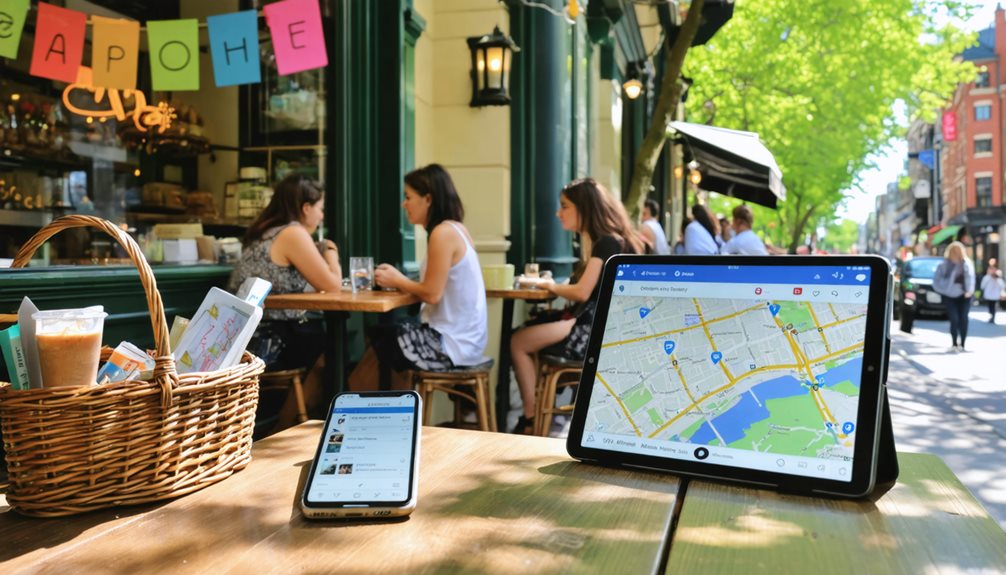

To thrive in local search, you need to optimize your Google My Business profile with complete and accurate info, high-quality images, and regular updates. Leverage local keywords by researching terms potential customers use and integrating them naturally into your website content. Build consistent local citations across directories and social platforms to enhance visibility. Encourage customer reviews by actively seeking feedback and responding to all reviews, showing you care. Engaging with your community through local events can also strengthen your presence. Stay tuned, as you'll discover even more tips to elevate your local search success.
Optimize Google My Business
To effectively attract local customers, you've got to optimize your Google My Business (GMB) listing. Start by ensuring your profile completeness; every section matters. Fill out your business name, address, phone number, website, and hours of operation. This information not only aids customer trust but also boosts your visibility in local searches.
Next, focus on photo optimization. High-quality images can greatly enhance your listing's appeal. Upload a variety of photos, including your storefront, products, and team members, to give potential customers a vivid glimpse into your business. Remember, listings with photos receive 42% more requests for directions and 35% more click-throughs to their websites.
Don't overlook the importance of customer reviews; they play an essential role in local SEO. Encourage satisfied customers to leave positive feedback, and always respond to reviews—both good and bad—to show that you value customer engagement.
Leverage Local Keywords
When it comes to attracting local customers, you need to tap into the power of local keywords. These keywords are essential for optimizing your online presence and ensuring that your business appears in relevant local searches. Start with thorough keyword research to identify the terms your potential customers are using. Look for phrases that include your service or product along with your city or neighborhood name.
Once you've gathered your local keywords, implement them strategically across your website, social media, and content. This means using them in titles, meta descriptions, and throughout your content. However, avoid keyword stuffing; instead, weave them naturally into your writing.
Don't forget about location targeting. This involves not just using local keywords, but also tailoring your content to highlight your connection to the community.
Build Local Citations
Building local citations is a crucial step in enhancing your small business's visibility in local search results. Citations are mentions of your business's name, address, and phone number (NAP) across various local directories and platforms. To start, identify relevant local directories where your target audience is likely to search for your services. Popular options include Google My Business, Yelp, and Yellow Pages.
Once you've listed your business, verify citation consistency. Consistent NAP information across all platforms helps search engines recognize your business as a trustworthy source, improving your local rankings. Inconsistencies can confuse both search engines and potential customers, diminishing your credibility.
To master local citations, regularly audit your listings. Verify that your information is accurate and up-to-date, and promptly address any discrepancies. You can also explore niche directories specific to your industry, as these can attract a more targeted local audience.
Encourage Customer Reviews
Having established a solid foundation with local citations, the next step is to encourage customer reviews. These reviews not only enhance your online reputation but also improve your local search rankings. Start by actively requesting feedback from your satisfied customers. After a purchase or service, send a quick email or text asking for their thoughts. Personalize these requests to show you genuinely value their opinions.
Consider implementing review incentives to motivate customers. Offering a small discount on their next purchase or entering them into a giveaway can greatly increase participation rates. Just make sure your incentives comply with platform guidelines to maintain integrity.
Make it easy for customers to leave reviews by providing direct links to your profiles on platforms like Google and Yelp. The simpler you make the process, the more likely they'll follow through.
Finally, don't shy away from responding to reviews, both positive and negative. Acknowledging feedback shows you're engaged and care about your customers' experiences. By consistently encouraging reviews and responding thoughtfully, you'll build a robust online presence that not only attracts new customers but also fosters loyalty among existing ones.